Kewaunee History
When the first white explorers and traders came to the area now known as the city of Kewaunee, they found one of the principal villages used by the Potawatomi tribe in this area of Wisconsin. In the late 1600s, French explorers and missionaries discovered this part of Wisconsin and many notable French explorers are said to have stopped at the Potawatomi village at Kewaunee. Among the explorers said to have been in Kewaunee was Father Marquette, who reportedly said mass there in 1671.
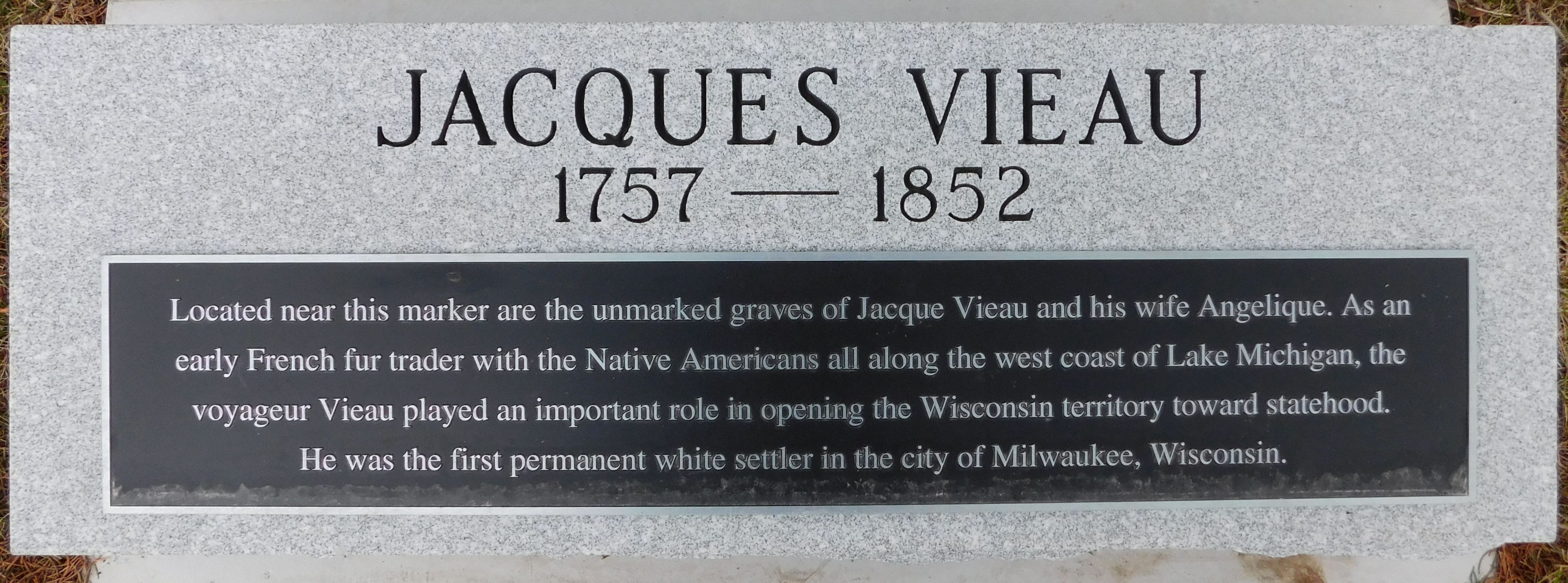
Not far behind the first explorers were the fur trappers and traders who began to establish a network for harvesting the bountiful fur-bearing animals in northeastern Wisconsin. While fur trading was known to have occurred in Kewaunee at this time, it was not until 1795 that Jacques Veau (Vieau) established a formal trading post at Kewaunee for the British Northwest Fur Company. The post only operated until 1818 and little activity took place at Kewaunee until the 1830s.
Around 1833 someone claimed to have found gold at Kewaunee and the U. S. Government authorized Joshua Hathaway to survey and plat the land there. When he completed his survey, much of the area was eagerly purchased by speculators, including some well-known state and national figures, hoping to make a "killing" selling land. It was soon discovered that there was no gold and interest in the area diminished. In 1837, investors Montgomery and Patterson from Chicago built a saw mill on the Kewaunee River, just up from the harbor, but problems keeping the mill supplied and shipping lumber out caused the mill to fail shortly after it was built.
It was not until 1843 that the first permanent settler, John Volk, came to Kewaunee. Volk purchased the failed saw mill and the old fishing shanties that had been used by the Potawatomi. He refurbished the mill and began milling and shipping lumber out of the harbor. This was a difficult task, as the Kewaunee harbor was unimproved and boats making regular runs along Lake Michigan were not able to dock for shipments there. In 1850, Volk built a pier and began profitably shipping lumber via regular schooners along the lake.
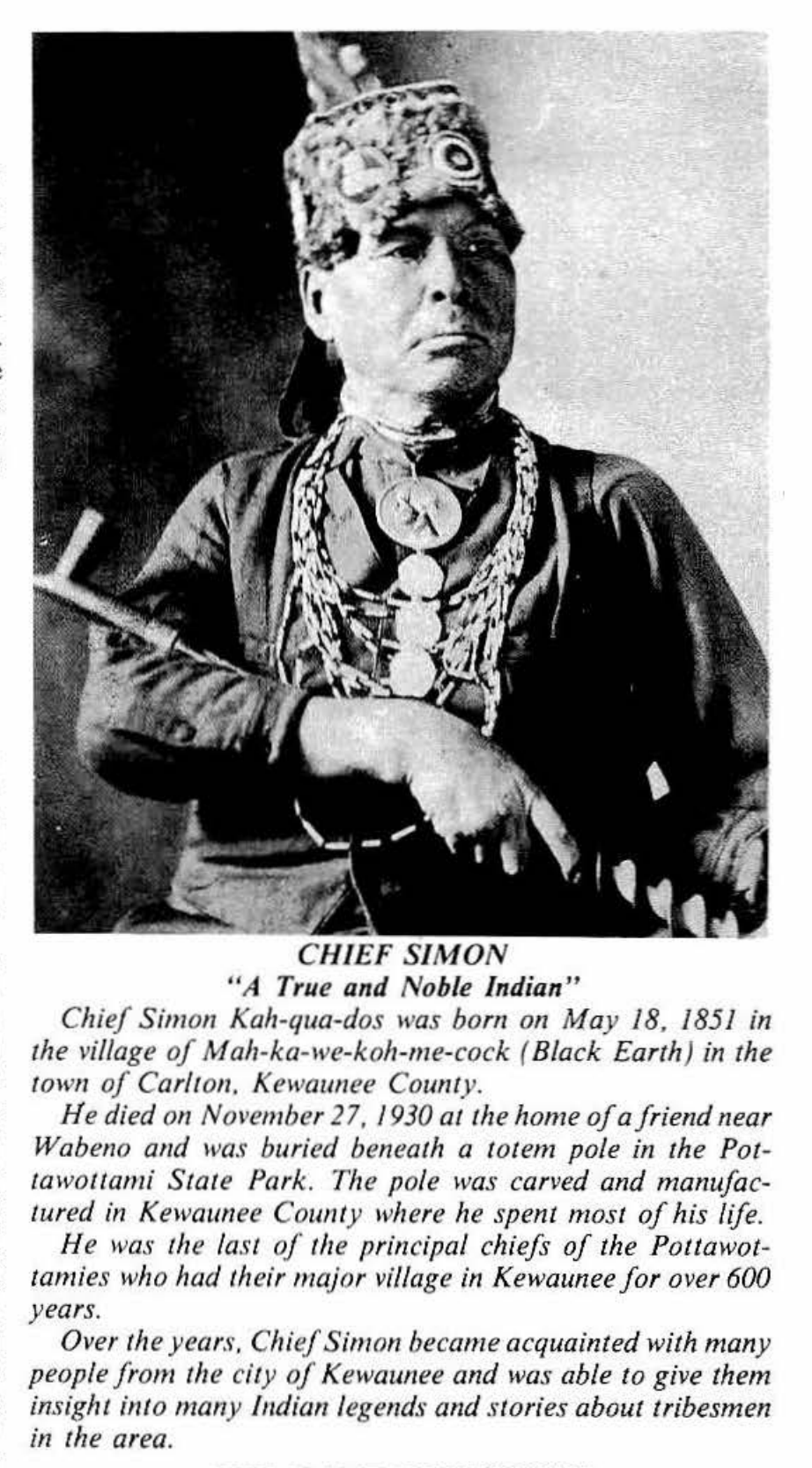
While the Potawatomi tribe reportedly left their village around 1700, they did not cede their lands in the Kewaunee area until 1853. It was in that year, when the land around Kewaunee was officially offered for sale, that the large influx of settlers came to the fledgling community. Yankees from the eastern United States were the first arrivals, but immigrants from many European countries were soon to follow. In particular, a large group of Bohemians made Kewaunee their home.
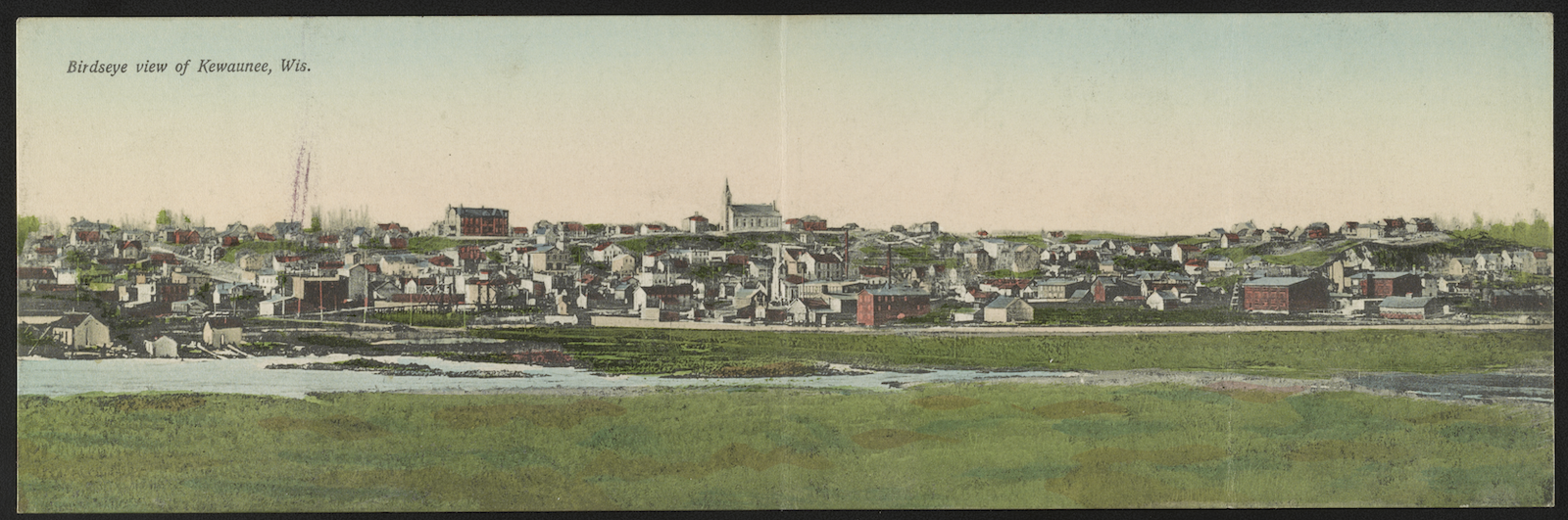
In 1852, Kewaunee was organized as a town, but the town consisted of only the saw mill and four cabins. But by the end of the decade, Kewaunee had regular stage service to Green Bay, several stores, several mills, a hotel, a school building, and it had been named the county seat. The famous Peshtigo fire in 1871 raged not far from the little community and the air was filled with heavy smoke. The fire actually reached the edge of the town and burned several homes, but a timely rainfall saved the rest of the community from the fire. Not long after, Kewaunee was incorporated as a village in 1873 and as a city in 1883.
As the lumber industry grew in northern Wisconsin, so did Kewaunee. The first harbor improvements were made in 1881 and included longer piers, channel dredging, and construction of a turning basin. In this way,an already good natural harbor was made even better, making Kewaunee an important shipping center in northeastern Wisconsin. During the height of the lumber era in the nineteenth century, vast amounts of logs were floated down the Kewaunee River to Kewaunee saw mills, and then to the schooners that took the lumber to the rest of the country via the Great Lakes.
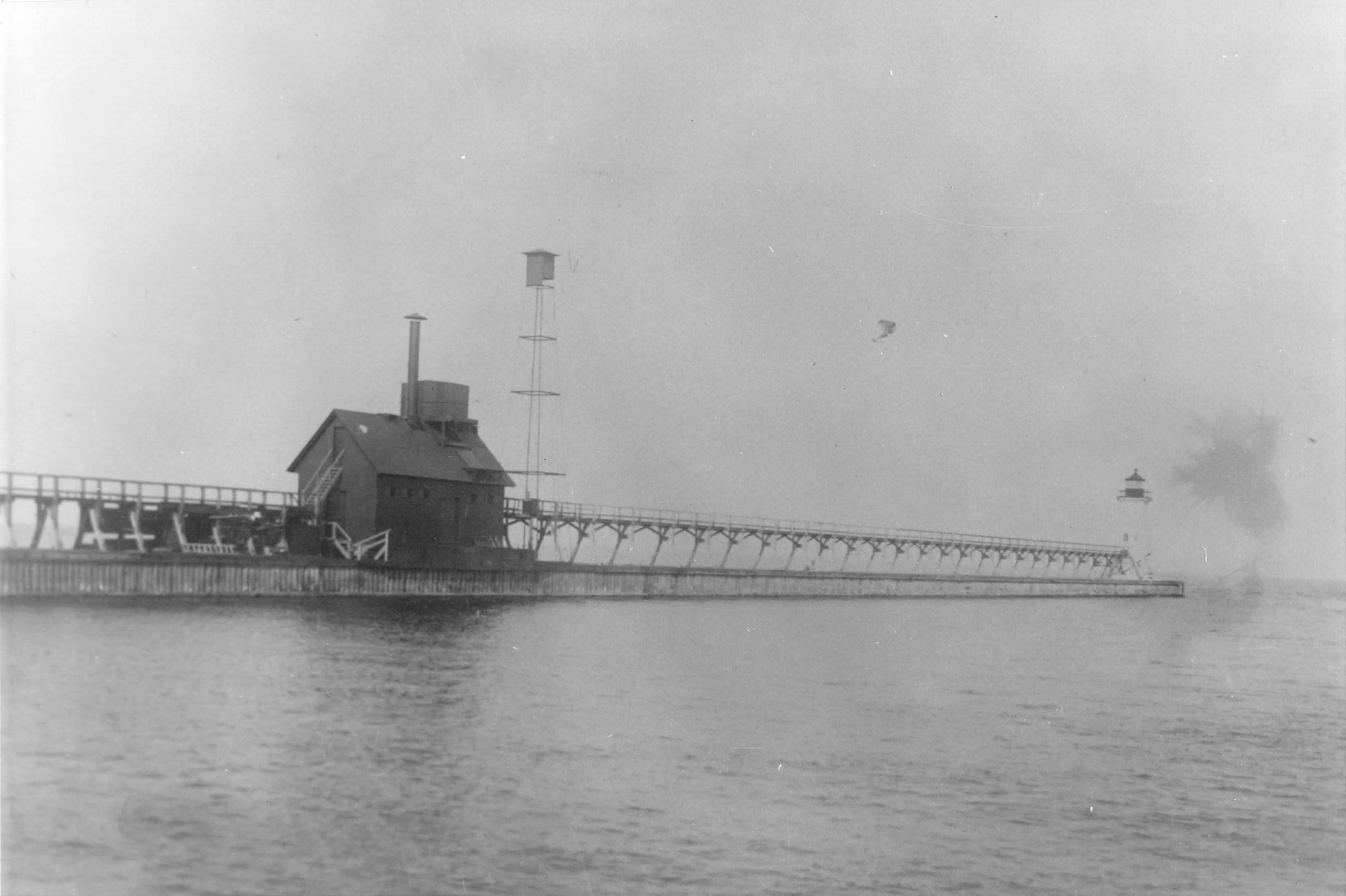
While Kewaunee was an important shipping port, like most communities in the nineteenth century, it desired a railroad connection. In addition, Kewaunee businessmen desired an extension of the railroad across Lake Michigan in the form of a car ferry. In 1891, the Kewaunee, Green Bay and Western Railroad came to Kewaunee, and one year later, a car ferry was established across the lake. These important transportation links came at the same time as industrial development in the community.
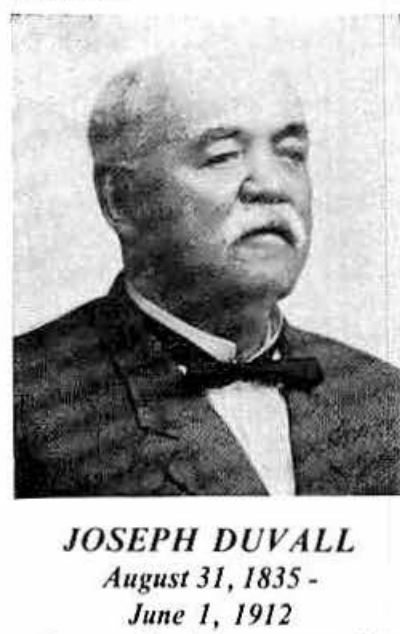
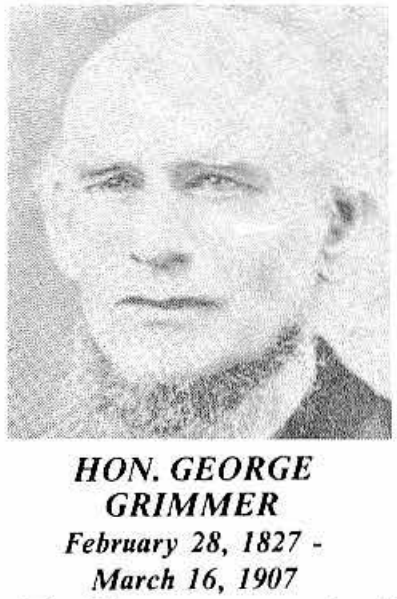
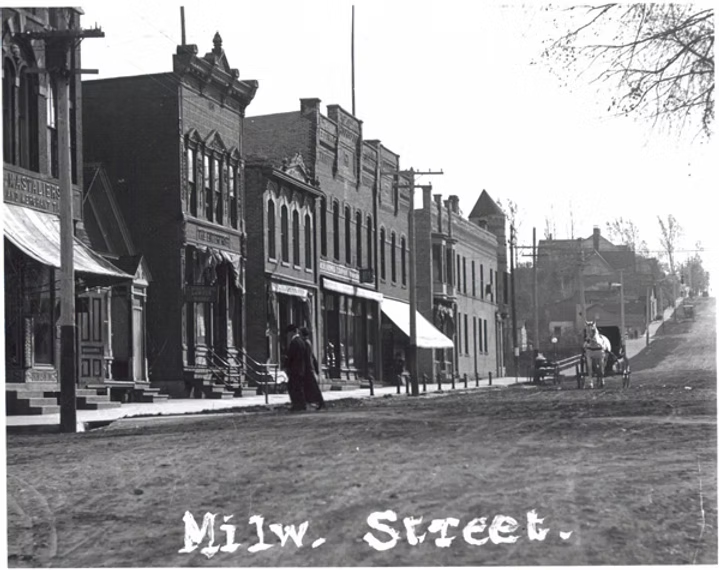
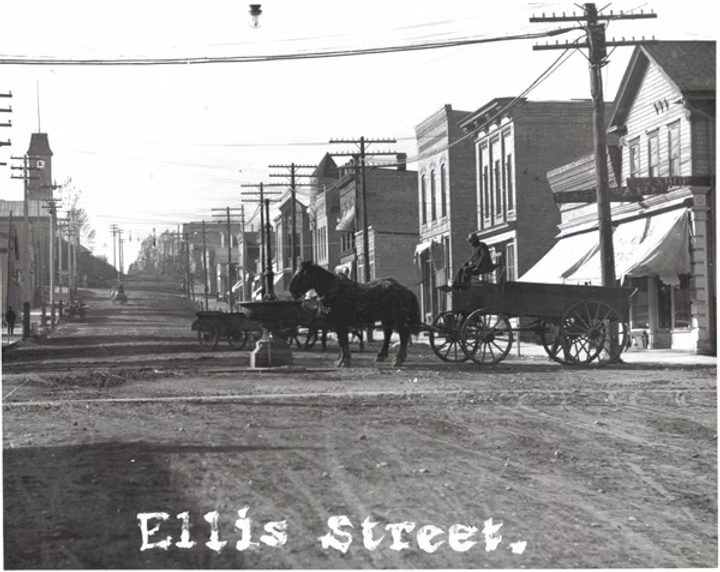
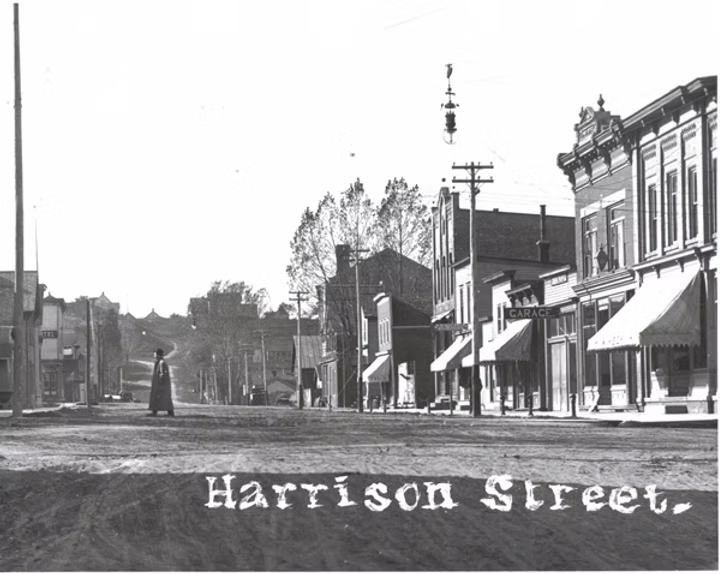
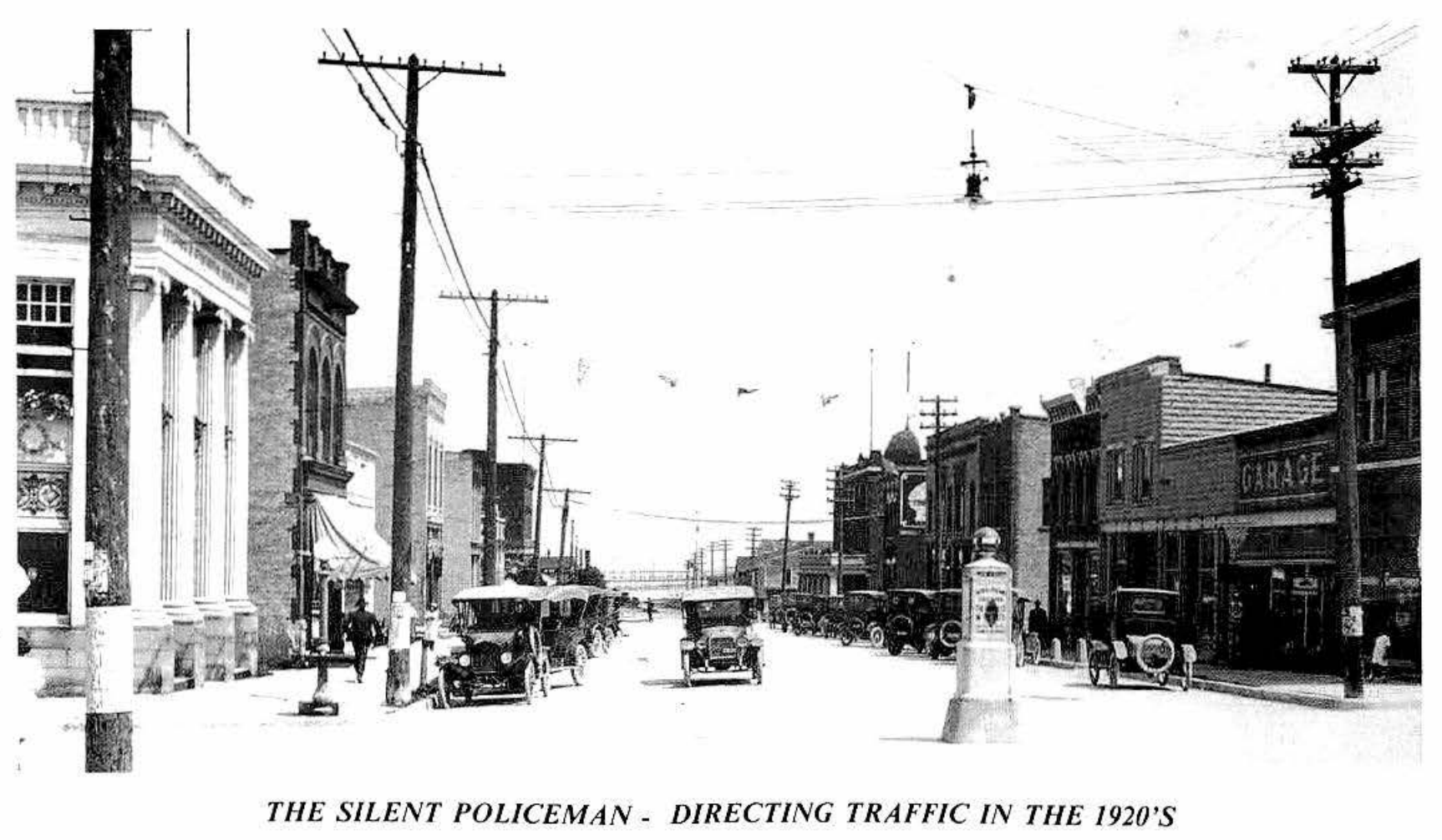
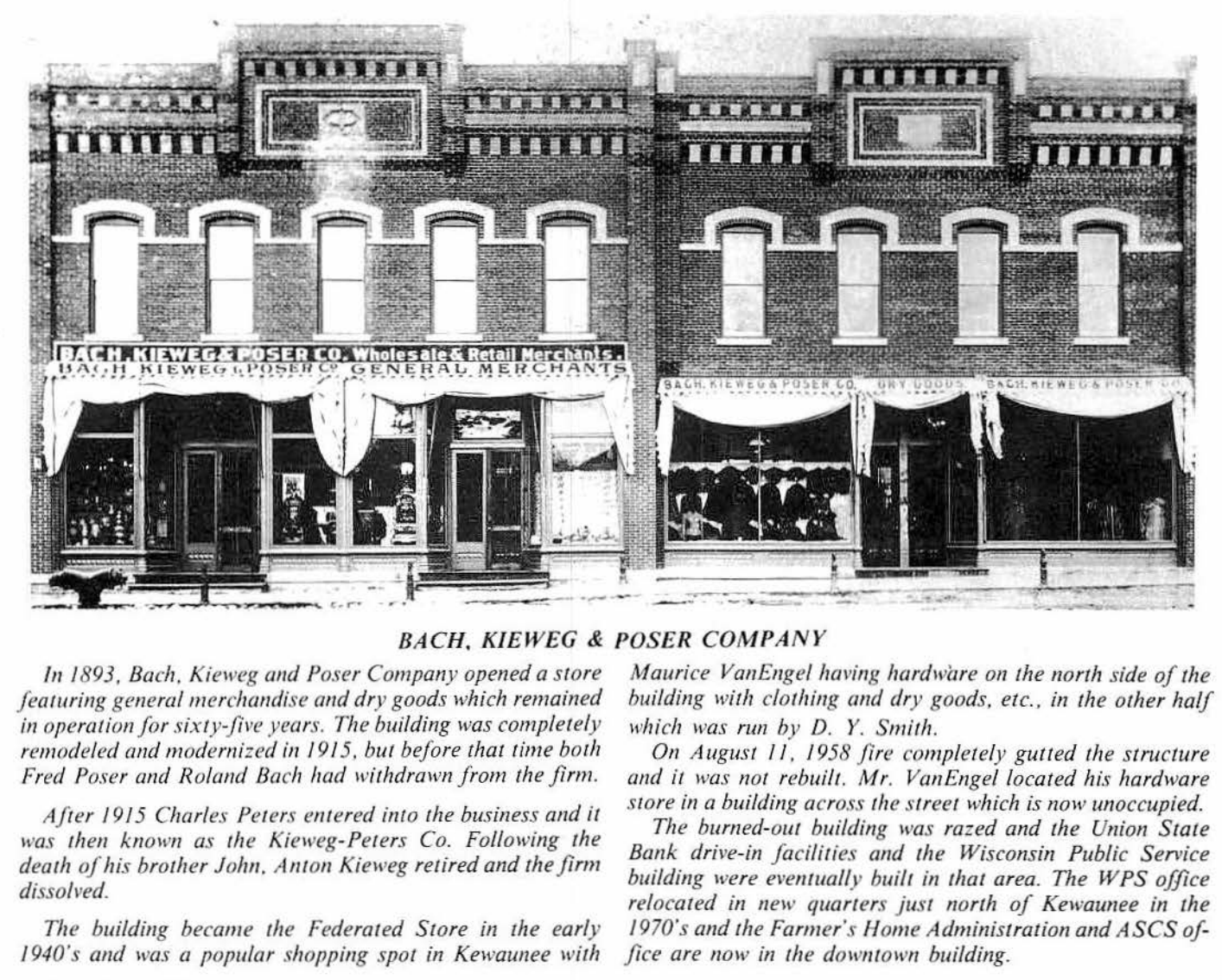
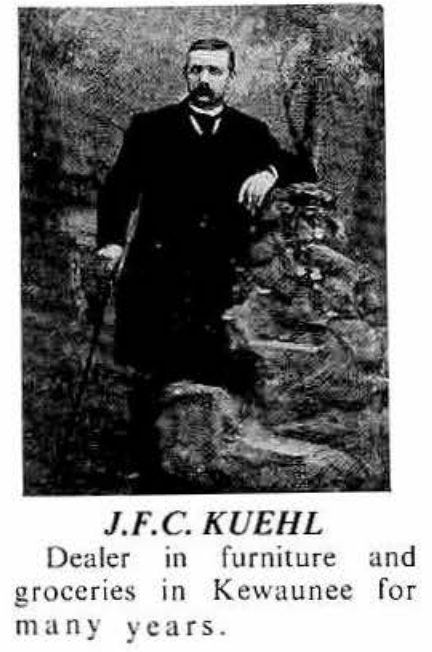
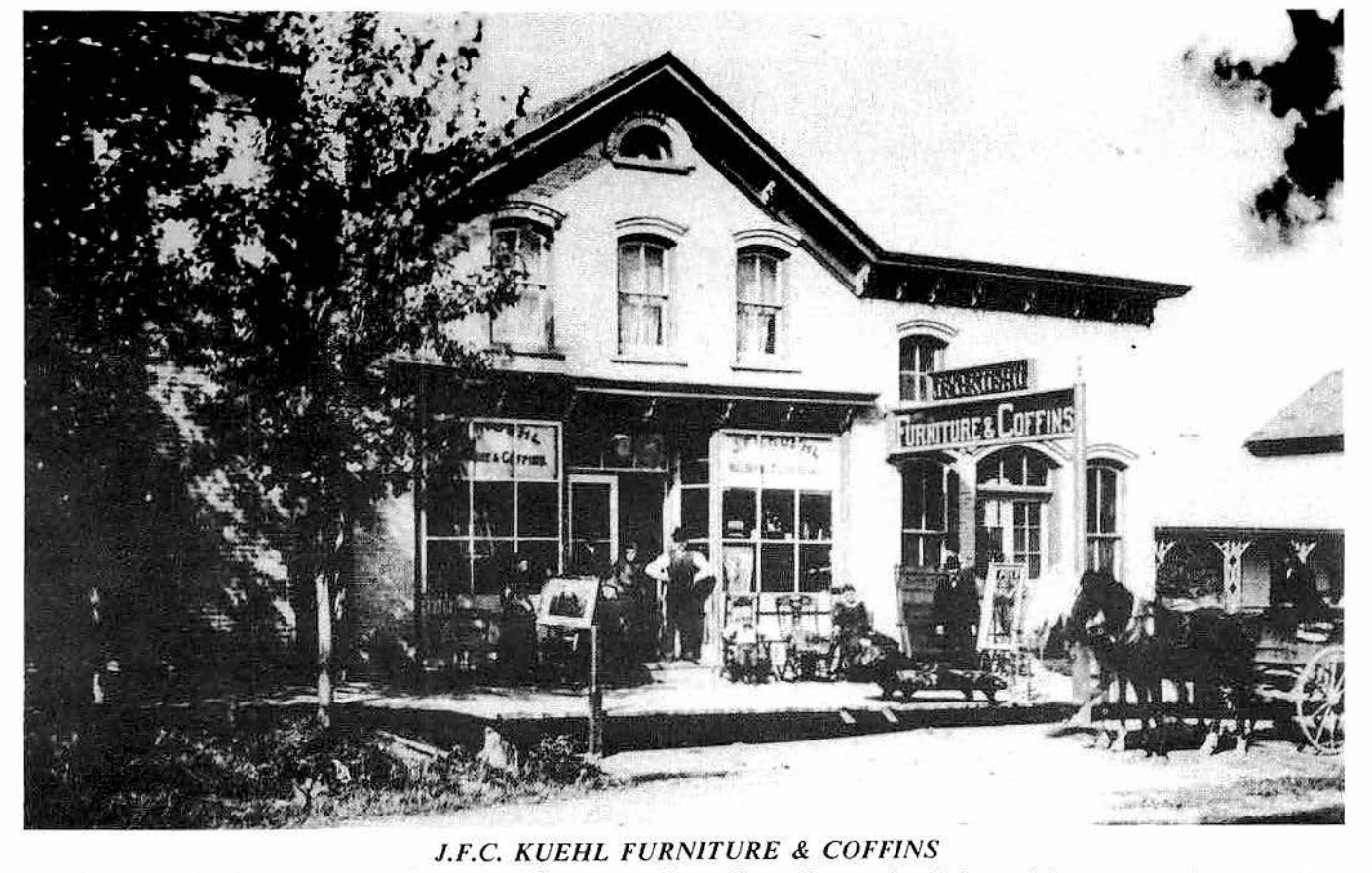
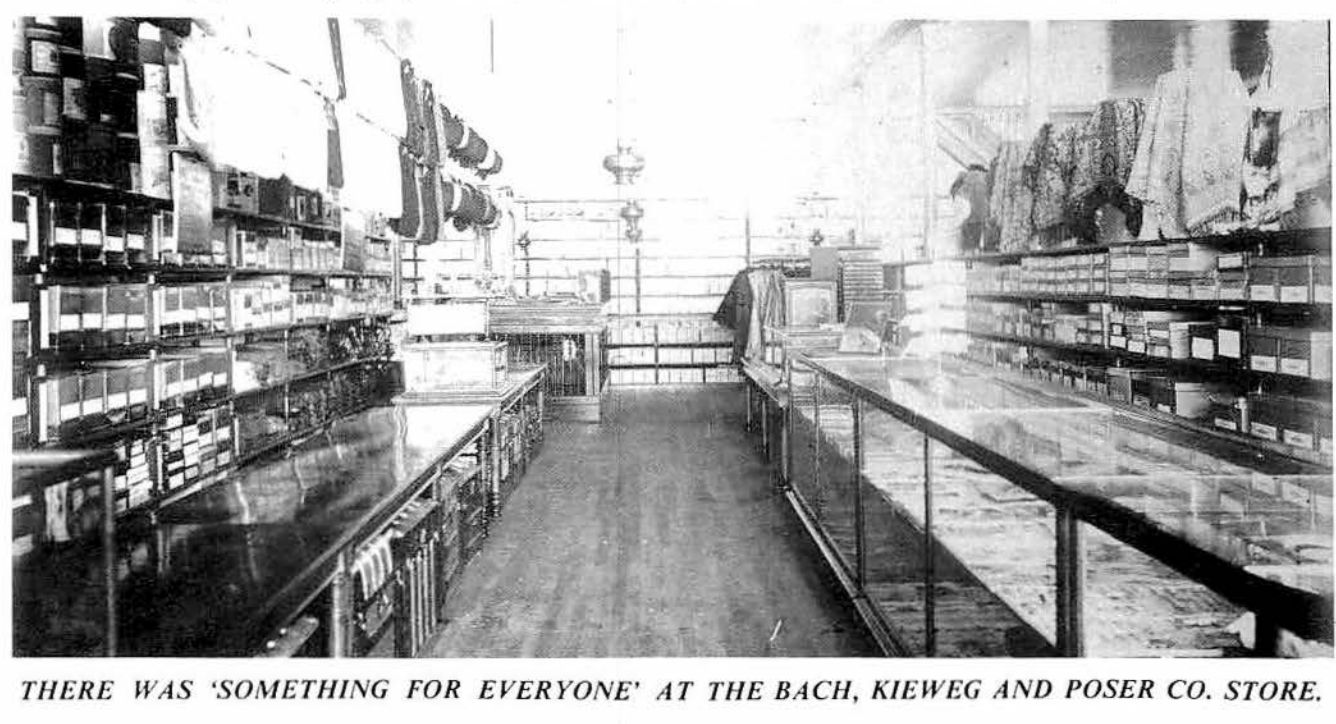
Kewaunee's economic base was rooted in lumber and shipping in the nineteenth century. Men like Joseph Duvall and George Grimmer made their fortunes with investments in timber lands, saw mills, and shipping lines. When the lumber and saw mill era died out, Kewaunee did not die with it, as other types of industry took its place. These industries included the Leyse Aluminum Company, a manufacturer of cookware and other aluminum products, and the Kewaunee Manufacturing Company, a manufacturer of specialty laboratory furniture. These, and other Kewaunee industries employed as many as 600 workers at the turn of the century. At the eve of the Great Depression of the 1930s, Kewaunee could boast of two newspapers, three banks, three department stores, 2 hotels, and over 15 other commercialbusinesses.
Throughout the late nineteenth and much of the twentieth century, Kewaunee was a prosperous community with a thriving retail, industrial, and transportation economy. This prosperity is reflected in the homes and school in the Marquette Historic District, since the development of this neighborhood began when prosperous business families desired new, large homes outside of the dense residential ring around the community's downtown. Setting the tone for the new neighborhood were prominent businessmen Joseph Duvall and George Grimmer, who built large Italianate and Queen Anne mansions in 1881 and 1883, respectively.
Soon to follow in the neighborhood were a number of fine Queen Anne houses built by other prominent families in Kewaunee, including the Michael and Mattie McMahon house (822 Dodge St.), built across the street from the Grimmer home in 1888; the John and Laura Haney house (324 Center St.) built in 1889; the Theo and Harriett Borgman and the John and Catherine Wattawa houses (1018 Dodge St., 222 Dorelle St.), both built in 1894; the George and Maud Duvall house (1017 Milwaukee St.), built in 1900; and the two Kieweg houses (1203, 1213 Dodge St.), built in 1894 and 1902.
Building in the neighborhood continued after the turn of the century. Beginning with the John and Augusta Dishmaker house (903 Dodge St.), built around 1900, several Prairie style-influenced American Foursquare houses were erected in the district in the early twentieth century. Continuing the large scale of the late nineteenth century homes in the district, John and Marie Borgman built a Colonial Revival house (805 Dodge St.) in 1909, and Norman and Carrie Leyse built a Prairie style-influenced American Foursquare house (1003 Milwaukee St.) in 1914. Few bungalows were built in the district during this time, reflecting the fact that most families who built houses in the district at this time could afford, and desired, a larger home The Classical Revival Kewaunee Public School was also built during this era.
Prominent Kewaunee families continued to build homes in this neighborhood during the 1920s. The result was that a number of fine period revival style houses were built on some of the remaining lots in the district. These period revival houses include three Colonial or Georgian Revival houses (205 Rose St., 1919; 1104 Milwaukee St., 1928-29; 804 Milwaukee St., 1927) and three variations of the Tudor Revival style (1020 Milwaukee St., 1931; 1122 Milwaukee St., 1928-29; 1119 Dodge St., 1931).
The Great Depression of the 1930s and the lack of available land in the district were probably the reasons that only one house (921 Dodge St., 1938) was built after 1931. What is most striking about this neighborhood is the fact that few alterations have been made to the houses in the district since that time. The overall high integrity of the buildings, along with their high level of preservation gives the Marquette Historic District a nineteenth and early twentieth century appearance, even though it is now the end of the twentieth century. Today, the owners of the fine homes in this neighborhood are almost all committed to the continued preservation of this outstanding historic district.